Blue Light, Headaches & Tired Eyes: What Actually Causes Eye Strain
Blue light from screens is rarely the main reason for headaches and tired eyes. Eye strain from screens is more often linked to intense focusing, reduced blinking, glare, poor posture and uncorrected vision[1]. This guide separates what blue light does and does not do, and explains what the research on macular pigment really measured.
- Do blue light headaches really come from blue light?
- What blue light does and does not do
- Why screens cause headaches and tired eyes
- Relief for tired eyes: breaks and workstation setup
- Blue light, sleep and night mode
- Blue light supplements and what the macular pigment research measured
- When to see an eye doctor
- Blue light from screens has not been shown to damage the eyes, and it is rarely the main cause of screen headaches.
- Focusing effort, reduced blinking, glare, posture and uncorrected vision are more likely culprits.
- The 20-20-20 rule and a well-set-up workstation are the best-supported first steps.
- Evening blue light may disrupt sleep, so dimming screens and using night mode at night is reasonable.
- Macular pigment research looked at visual performance, not headache relief or disease prevention, and evidence is limited. See an eye doctor for persistent symptoms.
Do blue light headaches really come from blue light?
Probably not in the way most people assume. The American Academy of Ophthalmology lists headaches, tired or sore eyes, blurred vision, dry eyes and neck or shoulder pain as common symptoms of digital eye strain, and ties them to how people use screens, not to blue light itself[1].
Long sessions at a screen change how the eyes behave. People tend to blink less, sit too close, work in poor lighting or put up with glare[1]. Each of these can leave the eyes and head feeling worn out by the end of the day.
That is why a fix aimed only at blue light often disappoints. The better approach is to look at the whole setup: the screen, the room, the body position and the eyes themselves.
What blue light does and does not do
Blue light is part of visible light. The sun is by far the largest source, and screens give off only a small amount by comparison[2].
What the evidence does not show:
- Blue light from screens has not been shown to damage the eyes[2].
- Harvard Health notes that there is no proof that blue light from devices raises the risk of macular degeneration[3].
- The American Academy of Ophthalmology does not recommend special blue light glasses for eye strain[2].
What blue light may do: Exposure to blue light in the evening can interfere with sleep and the body clock[3]. This is the more realistic concern, and it is covered in the sleep section below.
In short, blue light is a reasonable thing to manage at night. It is not a proven cause of eye damage, and it is not the most likely cause of a screen headache.
Why screens cause headaches and tired eyes
Several common factors tend to overlap. Working through them one at a time is usually more useful than guessing.
- Focusing effort. Reading small text at a close range keeps the focusing muscles working for hours[1].
- Reduced blinking. Blinking less can leave the eye surface dry, uncomfortable and blurry[1]. Readers whose eyes feel gritty may find the guide to dry eyes helpful.
- Glare and lighting. Reflections on the screen and a room that is much brighter or darker than the display make the eyes work harder[1][4].
- Posture. A screen that is too high, too low or too far to one side can lead to neck and shoulder tension, which may show up as a headache[1][4].
- Uncorrected vision. Refractive errors such as nearsightedness, farsightedness and astigmatism can cause eye strain and headaches when glasses or contacts are missing or out of date[5].
If vision seems blurry after phone use, the guide on blurry vision after using a phone covers that symptom in more detail.
Relief for tired eyes: breaks and workstation setup
The steps with the best support are practical and cost little.
Take regular breaks
The American Academy of Ophthalmology describes the 20-20-20 rule: every 20 minutes, look at something about 20 feet away for at least 20 seconds[1]. Blinking fully and often during those breaks helps too[1].
Adjust the workstation
OSHA's guidance on computer workstations focuses on screen position, glare control and a comfortable, supported posture[4]. A few checks worth making:
- Place the screen straight ahead, not off to one side.
- Reduce reflections from windows and overhead lights.
- Keep the room lighting balanced with the screen.
- Sit so the shoulders, neck and back are relaxed.
Get the eyes checked
If headaches continue despite these changes, an eye exam is a sensible next step. Uncorrected refractive errors are a known cause of eye strain and headaches[5]. For a step-by-step routine, see how to relieve computer eye strain and the home care overview.
Blue light, sleep and night mode
Sleep is where blue light has the clearest link to a real effect. Evening exposure can disrupt the body's sleep rhythm[3]. Cutting back on screens before bed and dimming the lights may therefore be reasonable[3].
Night mode or warm color settings reduce the blue portion of the display. They are an easy option for evening use, but they are not a proven treatment for eye strain. Dimming the screen, increasing text size and putting the device away earlier may matter as much.
Poor sleep can also make eyes feel more tired the next day, so the two problems can feed each other. Readers dealing with dry or blurry eyes after waking may find the guide on dry, blurry eyes in the morning useful.
Blue light supplements and what the macular pigment research measured
Some supplements are marketed as a shield against blue light from screens. The sources reviewed here do not show that any supplement blocks screen light or protects the eyes from it, and blue light from screens has not been shown to harm the eyes in the first place[2][3].
The research that is cited most often looks at macular carotenoids, mainly lutein and zeaxanthin, which build up in the macula at the center of the retina. One study, Stringham et al. (2017), examined macular carotenoids and visual performance in people with high screen time[6].
What this kind of research measures matters:
- It looks at macular pigment and visual performance in a specific group of screen users[6].
- It does not show that a supplement prevents or reverses an eye disease.
- It does not show that a supplement stops headaches or replaces breaks, a good workstation or an eye exam.
Evidence in this area is still limited, and results from one study should not be treated as settled. Readers curious about these nutrients can read about lutein and zeaxanthin and the guide to eye vitamins for computer strain. Anyone who takes medication or has a medical condition should check with a doctor or pharmacist before starting a supplement. For broader background, see eye health.
When to see an eye doctor
Screen-related discomfort is common, but it should not be assumed to be harmless every time. An eye doctor can check for refractive errors and other causes[5].
Book an exam if:
- Headaches are frequent or getting worse.
- Vision stays blurry after resting the eyes.
- Eye pain, redness or double vision appears.
- Symptoms continue even after improving the workstation and taking breaks.
Sudden vision changes, severe eye pain or a severe headache need prompt medical attention. Supplements should never be used in place of an exam. For a symptom checklist, see signs and symptoms of eye strain.
Eye supplements we have reviewed
Want to compare products? Read what the research says about nutrients for eye strain first, then compare the products below.

VisiFlora
Listed ingredients include astaxanthin, vitamin C, vitamin E, grape seed extract, ginkgo biloba and eyebright. The sources used here do not show that any of these relieve blue light headaches or screen-related eye strain, so evidence for this topic is lacking.
Listed ingredients: Astaxanthin, Vitamin C, Vitamin E, Copper, Selenium, Chromium

TheyaVue
Lutein and zeaxanthin are listed, and these are the macular carotenoids examined in screen-time research on visual performance. That research does not show relief of headaches or protection from blue light, and the other listed ingredients, such as bilberry, have no support in the sources reviewed here.
Listed ingredients: Lutein, Zeaxanthin, Vitamin C, Calcium, Vitamin E, Bilberry Extract
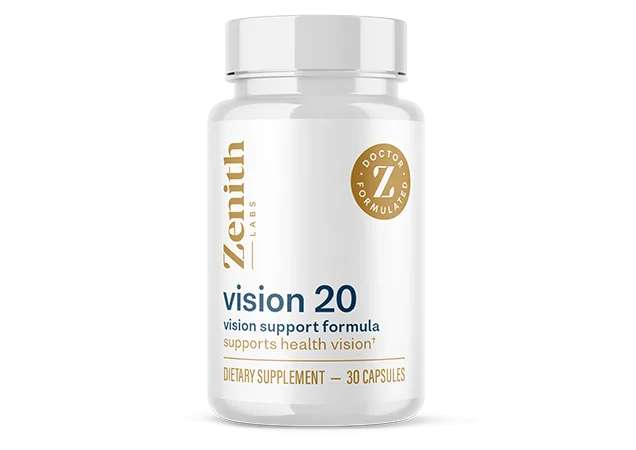
Vision 20
Lutein and zeaxanthin are listed and relate to the macular pigment research on screen users, though that work did not test headache relief. Ingredients such as taurine, lycopene, rose hips and grape seed extract have no good evidence for screen eye strain in the sources reviewed here.
Listed ingredients: Lutein, Zeaxanthin, Zinc, Beta-carotene, Lycopene, Rose Hips

iGenics
The label mentions AREDS-2 formula ingredients without itemizing them, along with ginkgo biloba, bilberry, saffron and turmeric. None of these are shown by the sources reviewed here to relieve blue light headaches or digital eye strain, so evidence for this topic is lacking.
Listed ingredients: Ginkgo biloba, AREDS-2 formula ingredients (not itemized), Bilberry, Saffron, Turmeric + BioPerine
Frequently asked questions
Can blue light cause headaches?
There is little evidence that blue light from screens is the main cause. Headaches during screen use are more often linked to focusing strain, glare, posture, dry eyes or uncorrected vision[1][5]. An eye exam can help sort out the cause.
Do blue light glasses help tired eyes?
The American Academy of Ophthalmology does not recommend special blue light glasses for eye strain[2]. Breaks, better lighting, less glare and correct glasses or contacts, if needed, have more support[1].
Does night mode help with sleep?
Evening blue light may interfere with the body's sleep rhythm, so reducing it and limiting late-night screen use is a reasonable step[3]. Night mode alone is not a proven fix, and cutting screen time before bed may matter more.
Can lutein and zeaxanthin supplements relieve screen eye strain?
Research has examined macular carotenoids and visual performance in people with high screen time[6]. That is not the same as showing relief from headaches or eye damage, and the evidence is limited. A doctor can advise on whether a supplement makes sense.
Sources
- American Academy of Ophthalmology: Computers, digital devices and eye strain
- American Academy of Ophthalmology: Should you be worried about blue light?
- Harvard Health: Will blue light from electronic devices increase my risk of macular degeneration?
- OSHA: Computer workstations
- National Eye Institute: Refractive errors
- Stringham et al. Foods 2017: macular carotenoids and visual performance with high screen time