Nutrients and Supplements for Eye Strain: What the Research Shows
Many people with tired, uncomfortable eyes after long screen days wonder whether a supplement could help. The research is thin, and most of it concerns one group of nutrients, the macular carotenoids. This page covers what has been studied, what has not, and how to read an eye supplement label without being misled.
- No source reviewed shows that any supplement prevents or treats eye strain; habits and workstation setup have the clearest support.
- Macular carotenoids such as lutein and zeaxanthin are the best-studied nutrients for screen users, but the evidence is early and limited.
- Most other ingredients on eye supplement labels have no good evidence for digital eye strain in the sources reviewed.
- Read labels for full ingredient amounts, modest claims and third-party testing, and tell a clinician about any supplement taken.
- Persistent symptoms call for an eye exam, since uncorrected refractive errors are a common cause.
Start with what causes eye strain
Digital eye strain is linked to how the eyes are used during long periods of screen work. The American Academy of Ophthalmology describes symptoms such as tired eyes, dryness, blurred vision and headaches, and ties them to habits like staring without breaks and reduced blinking[1].
This matters for supplements because a pill does not change any of those causes. No source reviewed for this page shows that a nutrient prevents or treats eye strain. At most, some nutrients have been studied for how they relate to visual performance in people who spend many hours on screens.
Supplements should also not stand in for an eye exam. Uncorrected refractive errors, such as nearsightedness, farsightedness and astigmatism, can cause eye strain and blurred vision, and an eye exam is how they are found[2]. If symptoms keep returning, an eye doctor should check for these first. Persistent blurry vision in particular deserves a professional evaluation.
Macular carotenoids: the best-studied nutrients for screen users
The macula is the central part of the retina. It contains pigments called macular carotenoids. Lutein and zeaxanthin are the two best known. A full overview is on the page about lutein and zeaxanthin.
A 2017 paper in the journal Foods examined macular carotenoids and visual performance in people with high screen time[3]. That is the most directly relevant research among the sources used here. It suggests the topic is worth studying, and it is why these nutrients show up so often on eye supplement labels.
There are limits to what this can tell a reader:
- A single study, or a small group of studies, does not settle the question. Findings need to be repeated by other research teams.
- Visual performance measures, such as how well the eye handles contrast or glare, are not the same as relief from everyday symptoms like tired or aching eyes.
- Results in a study group do not guarantee the same result for any one person.
- The evidence is limited, and it does not show that these nutrients cure, reverse or prevent any eye condition.
In short, macular carotenoids may support visual performance during heavy screen use, and the evidence is still early.
Blue light and the supplement pitch
Many eye supplements are marketed with blue light in mind. The worry is that screens damage the retina and that a supplement can offset it. Harvard Health has addressed whether blue light from electronic devices increases the risk of macular degeneration[4]. Readers who are concerned should read that article directly rather than rely on a product claim.
The key point is that blue light is a separate question from eye strain. Eye strain is mostly about focusing effort, blinking and workstation setup[1]. A label that blends the two topics, for example by implying a pill "blocks" screen damage, is making a larger claim than the sources reviewed here support.
Other ingredients on eye supplement labels
Eye supplements often list a long string of extras. Examples include vitamins C and E, zinc, taurine, alpha lipoic acid, grape seed extract, bilberry, ginkgo, saffron, turmeric and various plant extracts.
None of the sources reviewed for this page tested these ingredients for digital eye strain. That does not prove they have no effect. It means this page cannot point to good evidence for them on this topic, and a reader should be skeptical of any label that implies otherwise.
A few practical points follow:
- A longer ingredient list is not a stronger product.
- Some ingredients can interact with medicines. Ginkgo is one that people commonly ask a pharmacist about, especially if they take blood thinners.
- Mixed formulas can hide how much of each ingredient is present, which makes it hard to compare with anything studied.
If eyes feel gritty, burning or watery, dry eyes may be part of the picture, and a doctor can advise on causes that a general eye supplement does not address.
Food sources, doses and safety
The sources used for this page do not give specific food lists or dose amounts, so none are stated here. Guessing at numbers would not serve a worried reader. The better approach is to ask an eye doctor, a pharmacist or a registered dietitian what makes sense for a particular person.
Some general guidance still applies:
- Food first. A varied diet is a sound base for overall eye health, and supplements are an add-on, not a replacement.
- Tell clinicians what is being taken. This matters most for people who are pregnant, take prescription medicines, have a chronic condition or are scheduled for surgery.
- Avoid stacking. Taking several products with overlapping vitamins and minerals can push intake of some nutrients higher than intended. Add up what is in each one.
- Stop and ask for advice if a new supplement is followed by stomach upset, rash or any other unwanted effect.
- Do not delay care. Sudden vision changes, eye pain, flashes of light or a sudden shower of floaters need prompt medical attention, not a supplement trial.
Dose questions are especially important for fat-soluble vitamins and minerals, where more is not better. A professional can check a label against a person's actual health and diet.
How to judge an eye supplement label
A label is easier to assess when it is read with a checklist.
Claims
- Be wary of words like "cure," "reverse," "restore vision" or "clinically proven" without a clear, named study. No supplement has been shown to cure or reverse eye disease in the sources used here.
- Acceptable wording is modest, such as "supports" a nutrient need. Strong disease claims are a red flag.
Ingredients and amounts
- Look for a full supplement facts panel with an amount for every ingredient.
- Be cautious about "proprietary blends" that list ingredients without individual amounts.
- Check whether the listed ingredients match what research has actually looked at, such as macular carotenoids[3], or whether most of the list is filler of unknown value.
Safety and quality
- Check for allergen statements and warnings about medicine interactions.
- Look for independent third-party testing marks, which show a product was checked for what it says it contains.
- Be skeptical of testimonials and before-and-after stories. They are not evidence.
Fit for you
- Ask whether the product addresses a real, identified need. If an eye exam found nothing wrong and symptoms track with long screen sessions, habits are the first place to look.
Fix the basics first
Habits and workstation setup have the clearest support for eye strain. The American Academy of Ophthalmology recommends regular breaks, including the 20-20-20 rule: every 20 minutes, look at something about 20 feet away for about 20 seconds[1]. It also points to conscious blinking and a comfortable screen setup[1].
OSHA's guidance on computer workstations covers how to arrange the monitor, chair, keyboard and lighting so the body and eyes are not working harder than necessary[5]. Fixing glare and viewing distance costs little and has a direct link to the cause of the symptoms.
If symptoms continue after these changes, book an eye exam. A prescription issue is a common and fixable reason for eye strain[2]. A supplement can be discussed at that visit, but it should not replace the exam.
Eye supplements we have reviewed
These are the 4 eye-health supplements we have reviewed on HealthSupplements.best. None of them is proven to treat or prevent eye strain; talk to your eye doctor before starting any supplement, especially if you take other medicines.
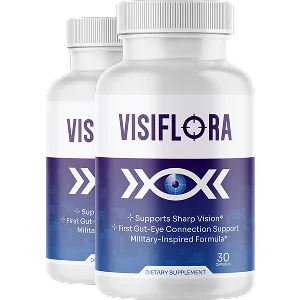
VisiFlora
Lists astaxanthin, vitamins C and E, selenium, taurine, alpha lipoic acid, ginkgo, eyebright and other extras. None of these were tested for digital eye strain in the sources reviewed, so there is no good evidence here for this topic. Ginkgo may interact with some medicines, so ask a pharmacist.
Listed ingredients: Astaxanthin, Vitamin C, Vitamin E, Copper, Selenium, Chromium
TheyaVue
Lists lutein and zeaxanthin, which relate to the macular carotenoid research in people with high screen time, though that evidence is limited. The other listed ingredients, such as bilberry, rutin, zinc and vitamins C and E, have no good evidence for eye strain in the sources reviewed.
Listed ingredients: Lutein, Zeaxanthin, Vitamin C, Calcium, Vitamin E, Bilberry Extract
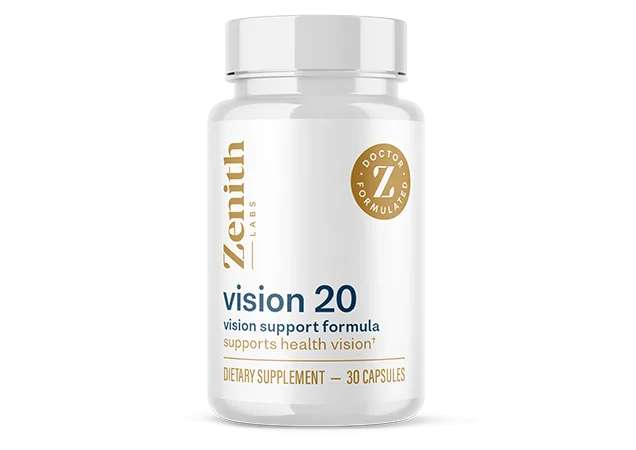
Vision 20
Lists lutein and zeaxanthin, which relate to the macular carotenoid research on screen users, though the evidence is limited. Ingredients such as beta-carotene, lycopene, taurine, grape seed and bilberry have no good evidence for eye strain in the sources reviewed. Anyone taking other vitamin A sources should check with a clinician.
Listed ingredients: Lutein, Zeaxanthin, Zinc, Beta-carotene, Lycopene, Rose Hips
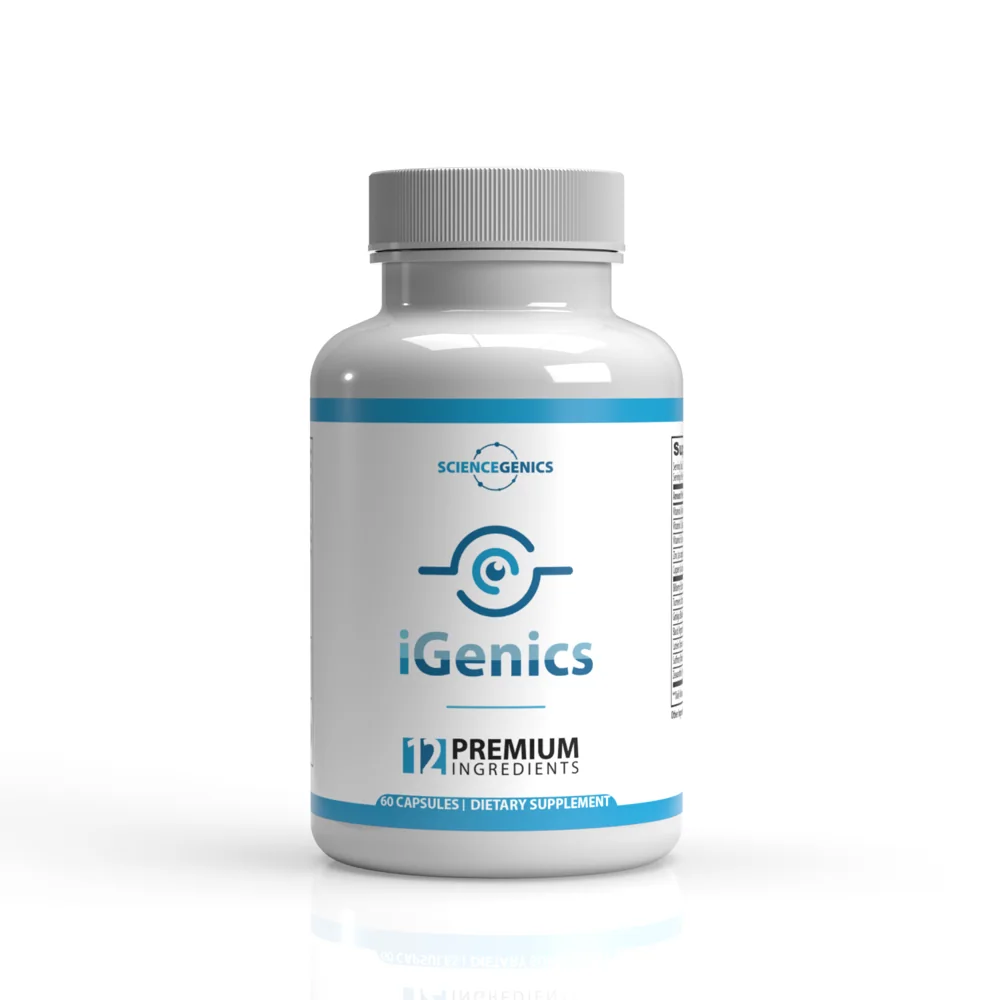
iGenics
Lists ginkgo, bilberry, saffron and turmeric, plus an AREDS-2 formula that is not itemized. None of these were tested for digital eye strain in the sources reviewed, so there is no good evidence here for this topic. Without itemized amounts, the label is hard to compare with any research, and ginkgo may interact with some medicines.
Listed ingredients: Ginkgo biloba, AREDS-2 formula ingredients (not itemized), Bilberry, Saffron, Turmeric + BioPerine
Frequently asked questions
Can a supplement fix eye strain?
No source reviewed shows that a supplement fixes eye strain. Breaks, blinking, a good workstation setup and a current prescription have stronger support[1]. Some nutrients may support visual performance, but the evidence is limited[3].
Does blue light from screens damage the eyes?
Harvard Health has addressed whether device blue light raises the risk of macular degeneration[4]. Blue light is a separate question from eye strain, which is mainly tied to how the eyes are used during screen work[1]. An eye doctor can answer personal concerns.
Are lutein and zeaxanthin worth taking for screen use?
They have been studied in people with high screen time, and the research suggests they may support visual performance[3]. The evidence is still limited, and results may not apply to everyone. A clinician can advise on whether and how much to take.
When should an eye doctor be seen instead of trying a supplement?
See an eye doctor if symptoms persist after better breaks and workstation changes, or if vision is blurry. Uncorrected refractive errors can cause eye strain and are found through an eye exam[2]. Sudden vision changes or eye pain need prompt care.
Sources
- American Academy of Ophthalmology: Computers, digital devices and eye strain
- National Eye Institute: Refractive errors
- Stringham et al. Foods 2017: macular carotenoids and visual performance with high screen time
- Harvard Health: Will blue light from electronic devices increase my risk of macular degeneration?
- OSHA: Computer workstations